05
1970–1988
The Patriarch: Tributes and Farewells
A period of profound contrasts defined by full maturity, the challenges of cardiovascular health, a refinement through art collecting, and official recognition from the State—culminating in a tragic succession of family losses during the late 1980s.
The Heart, Surgery, and Art
After decades of superhuman physical effort to remain mobile with his prosthetics, Dietrich’s heart began to fail in the 1970s. He faced heart attacks and, in 1980, traveled to Houston to undergo aortocoronary bypass surgery with the pioneering Dr. Denton Cooley.
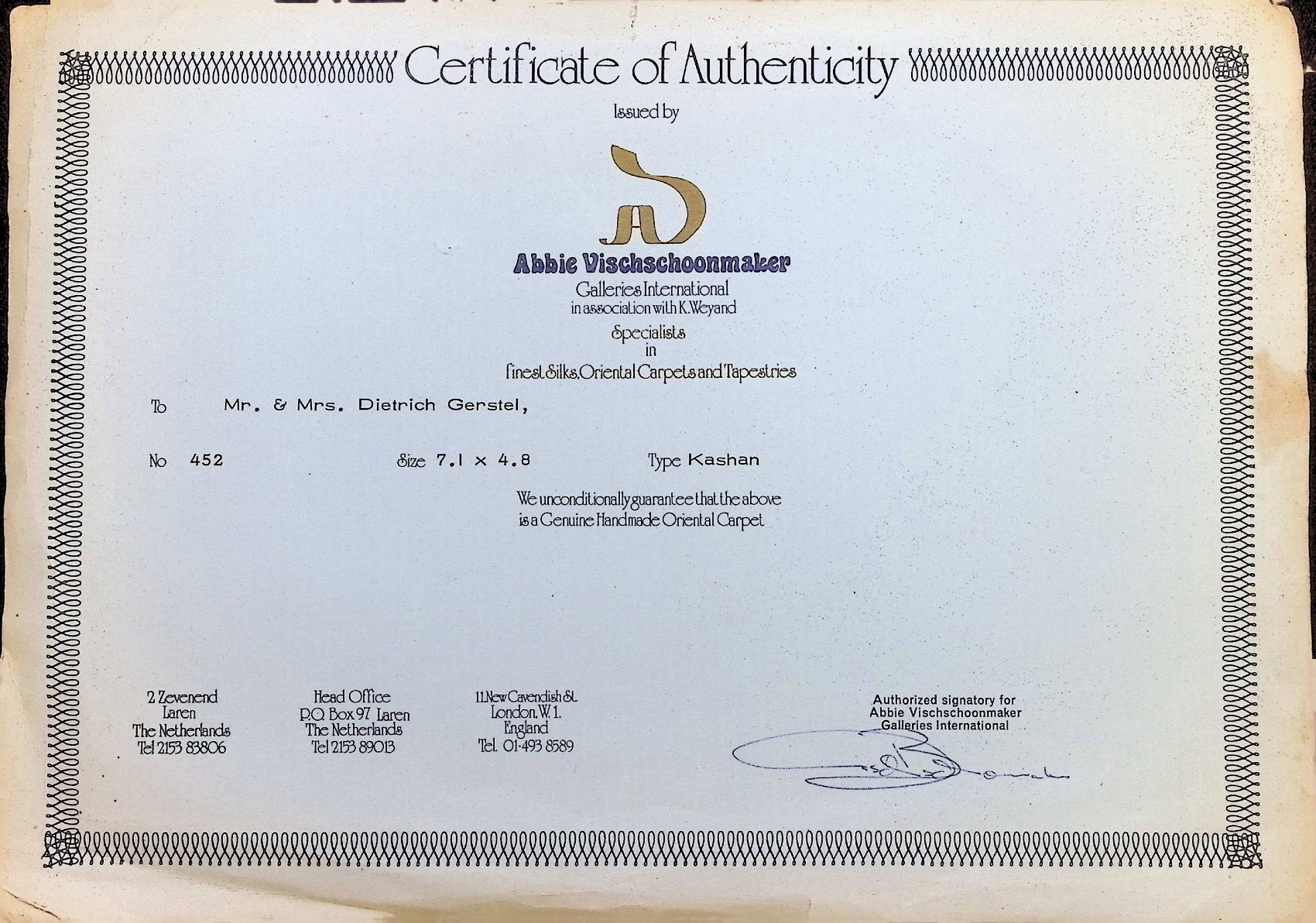
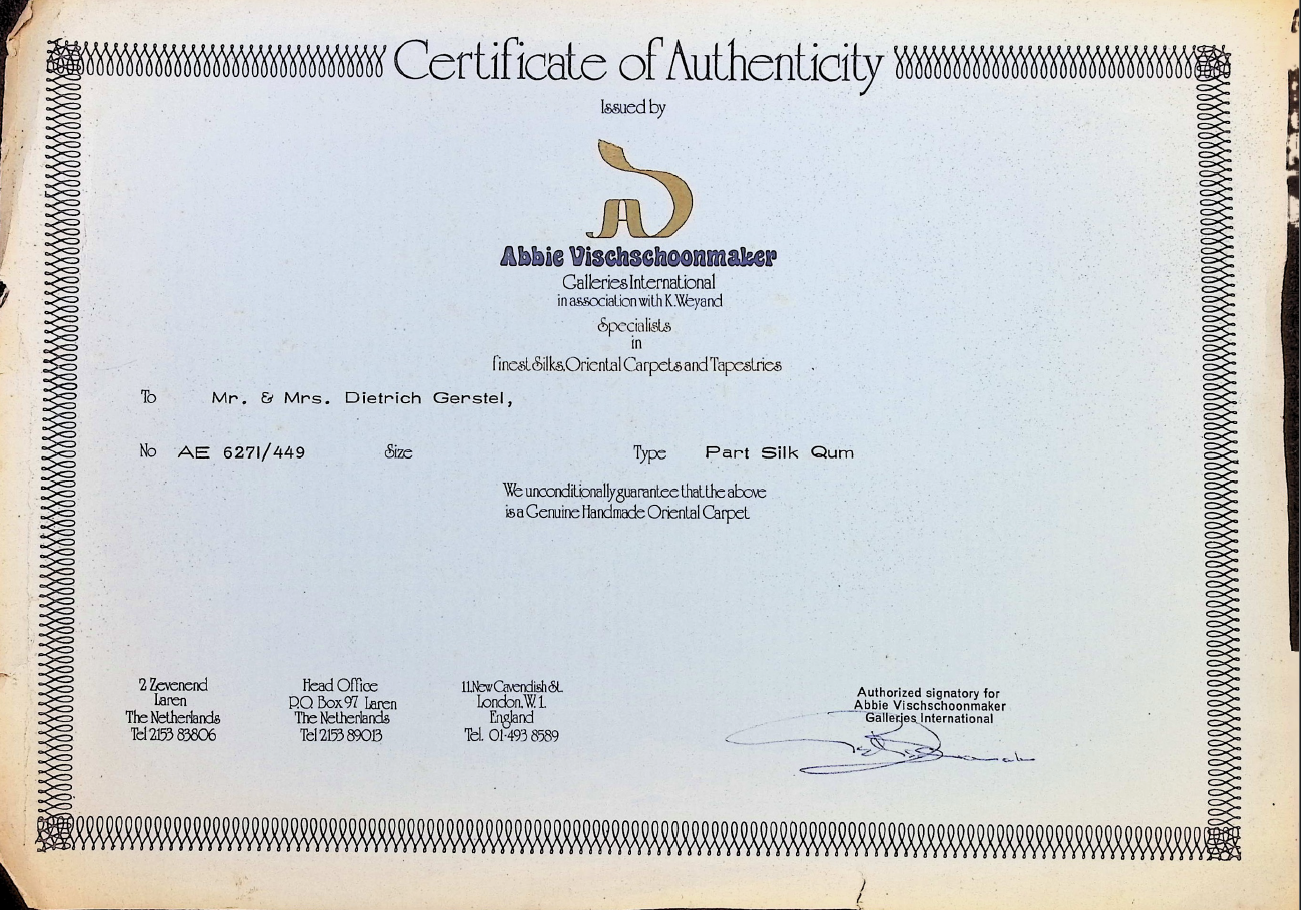
Far from surrendering, Dietrich channeled his energy into aesthetic enjoyment: he became a passionate collector of Oriental rugs and ivory carvings. Documents from this era show the acquisition of certified “Kashan” and “Qum” pieces, transforming his home in Prados del Este into a sanctuary of beauty and permanence that stood in stark contrast to his fragile health.
Professional Consecration: The Order of Merit
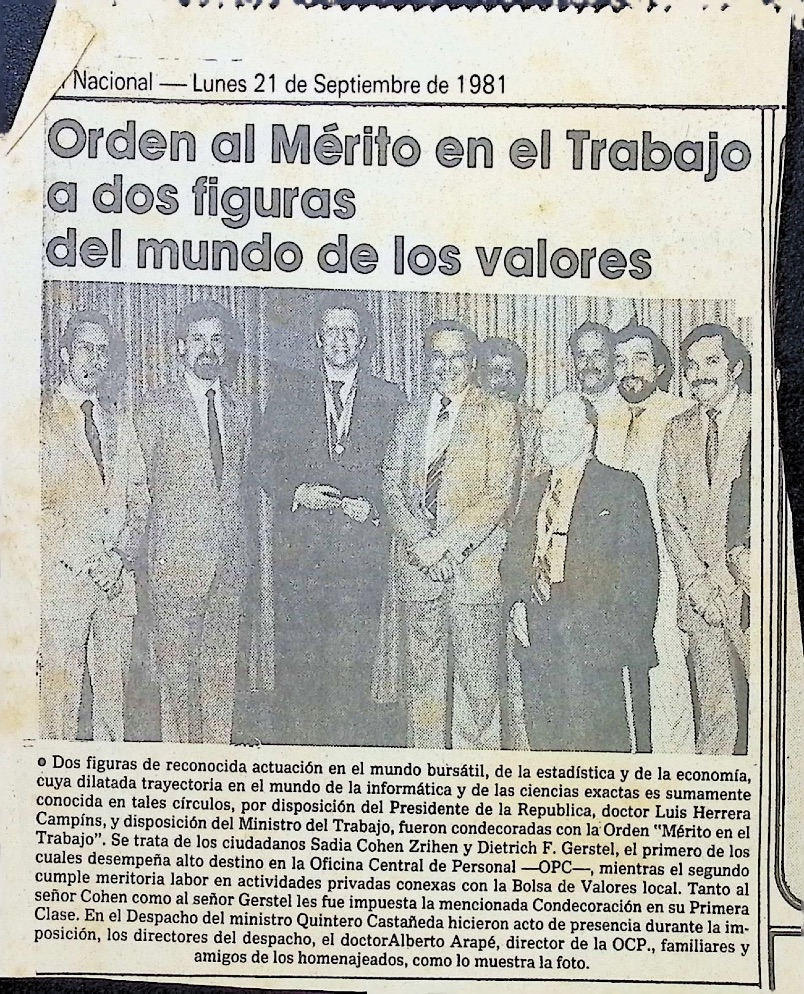
On September 21, 1981, Dietrich received the highest honor of his career: the Government of Venezuela bestowed upon him the Order of Merit for Work, First Class. The ceremony, covered in the national press, recognized his long-standing trajectory in the exact sciences and stock market activity. This award certified that the immigrant who had arrived with nothing but the clothes on his back in 1939 was now a respected and fundamental figure in the economic development of his adopted country.
Navigating Grief and the Healing Cruise
The decade closed with a “terrible year.” In 1987, the family suffered two devastating blows: the accidental death of his eldest grandson, Ernesto, and the passing of Richard Ostberg—Dietrich’s brother-in-law and fellow exile.
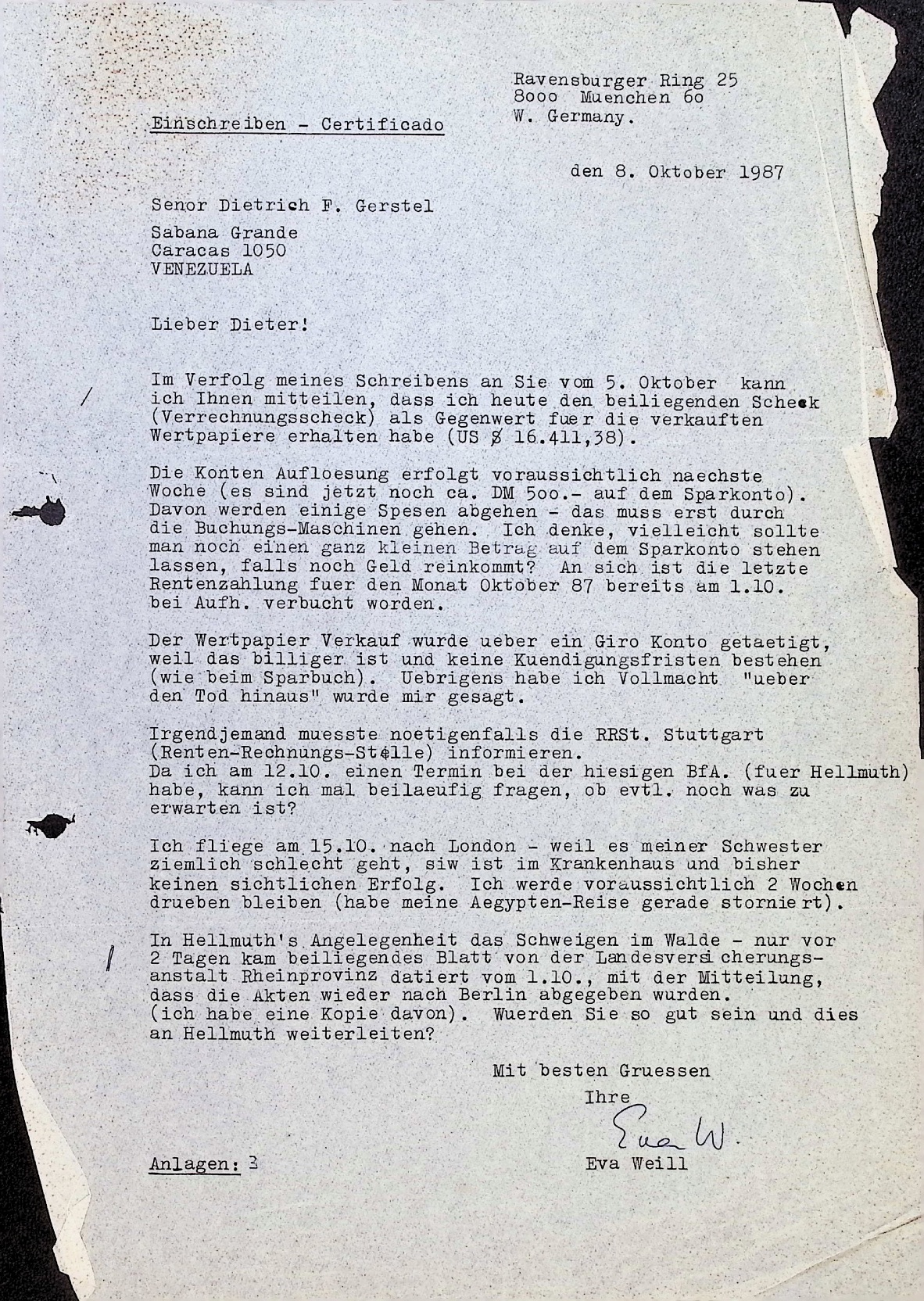
In the face of tragedy, Dietrich embraced his role as the provider-patriarch with both pragmatism and tenderness. On one hand, he ordered the urgent sale of securities in Germany to repatriate funds, ensuring immediate liquidity in response to the crisis. On the other, he understood that the family needed to heal together: in December of that same year, he organized and financed a Caribbean cruise for everyone—children, grandchildren, and spouses alike.
It was a journey conceived as a mechanism for collective healing, an attempt to shield the family’s unity against the void left by their losses.
Golden Anniversary and the Farewell to Irmgard
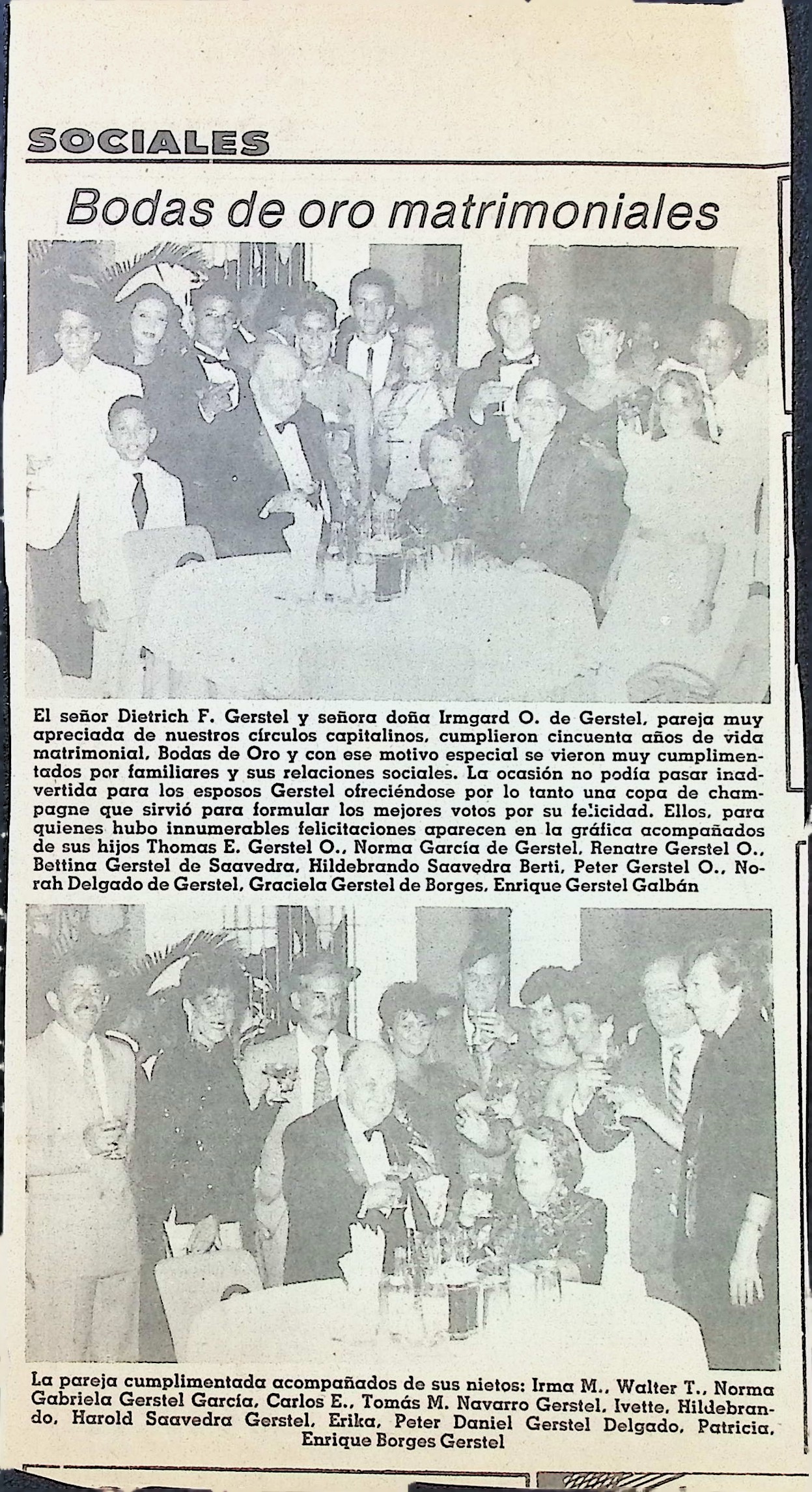
Driven by their shared resilience, Dietrich and Irmgard reached the milestone of their Golden Wedding Anniversary on April 14, 1988. It was a night of “infinite happiness,” commemorating fifty years of enduring the world’s storms together. Yet, fate was implacable: only months later, in September 1988, Irmgard passed away after a brief illness. Her departure shattered Dietrich’s vital framework; for the first time, the family saw the “man of iron” break, revealing that his strength had always emanated, in essence, from his wife’s company.
Historical Documents
Certificados de Autenticidad de Alfombras Orientales
Documents issued by Galleries International (Abbie Vischschoonmaker) guaranteeing the authenticity of the “Fine Kashan” and “Part Silk Qum” rugs acquired by the Gerstels. These pieces attest to the aesthetic refinement and the passion for collecting that Dietrich cultivated in his Prados del Este home during his years of financial maturity.
Press Clipping: The Order of Merit for Work
An excerpt from the newspaper El Nacional documenting the bestowal of the “Order of Merit for Work,” First Class, upon Dietrich F. Gerstel by the Minister of Labor. The article publicly recognizes his “long-standing trajectory in the world of information technology and exact sciences,” as well as his work in stock market-related activities, enshrining his successful integration into Venezuelan society.
Letter Regarding the Liquidation of Securities in Germany
Correspondence sent by Eva Weill from Munich to Dietrich, confirming the sale of securities and the transfer of funds (approx. $16,000) to Caracas. This financial move coincides with the passing of his brother-in-law Richard Ostberg (which occurred that same month) and the management of family assets during a year defined by mourning.
Retrospective Cardiovascular Report
A medical report issued by Dr. Moisés Sukerman at the Centro Médico de Caracas. Although dated in the 90s, this document serves as the historical source detailing his 1970 heart attack and 1979 angina, while confirming the aortocoronary bypass surgery performed in 1980 in Houston by the renowned Dr. Denton Cooley—validating the narrative of his health struggles.
"Saudi Venezuela" (1973–1979)
Following the 1973 oil crisis, crude oil prices quadrupled, ushering in an era of opulence for Venezuela. This influx of capital explains the surge in art collecting and the acquisition of luxury goods that Dietrich was able to enjoy.
Revolution in Cardiac Surgery
Dr. Denton Cooley, who performed Dietrich’s surgery in Houston, was a medical legend. During the 1970s and 80s, the coronary bypass transitioned from an experimental procedure to a standard solution, effectively granting Dietrich nearly two more decades of life.
"Black Friday" (1983)
The end of exchange-rate stability in Venezuela and the devaluation of the Bolívar, marking the onset of the nation’s economic crisis. This event underscores the strategic importance of Dietrich’s 1987 decision to repatriate funds in hard currency (German Marks and U.S. Dollars) to safeguard the family estate.
Oil Prices
Crude oil prices surged from $3 in 1970 to nearly $35 in 1980, fundamentally transforming the Venezuelan economy.
Dr. Denton Cooley (1920–2016)
Founder of the Texas Heart Institute and the surgeon who performed the world’s first total artificial heart transplant. His expertise was instrumental in Dietrich’s survival.
The Order of Merit for Work
A Venezuelan decoration created to recognize exemplary citizens for their dedication and efficiency. It was rarely bestowed upon non-naturalized foreigners, a distinction Dietrich had already secured by that time.
Inflation (1987)
During the family’s year of crisis, inflation in Venezuela hit a historical record of 40.3%. This economic instability justified Dietrich’s urgency in mobilizing his international assets.
Contexto Histórico
Primera Guerra Mundial (1914-1918)
Dietrich nació durante el último año de la guerra, en una Alemania devastada por el conflicto y marcada por la escasez alimentaria.
República de Weimar (1919-1933)
Período democrático en Alemania caracterizado por efervescencia cultural, inestabilidad política y avances médicos significativos, como los del Oskar-Helene-Heim.
Crisis de 1923
Hiperinflación catastrófica en Alemania. Un pan llegó a costar 200 mil millones de marcos. La clase media perdió sus ahorros.
30 de enero de 1933
Adolf Hitler asume como Canciller de Alemania, marcando el fin de la democracia. En marzo se aprueban las primeras leyes antisemitas.
Ley de Restauración del Funcionariado (abril 1933)
Primera ley que expulsó a judíos de cargos públicos y profesiones liberales. Afectó directamente a Walter Gerstel en sus posiciones directivas.
1934: Año de consolidación nazi
Hitler elimina oposición interna y se proclama Führer. Miles de judíos alemanes comienzan a emigrar, aunque muchos aún confían en que “pasará”.
Datos Clave
Población judía en Alemania (1933)
~500,000 personas (0.75% del total)
Judíos en Berlín
~160,000, la comunidad judía más grande de Alemania
Tasa de suicidios judíos (1933-1945)
Aumentó más del 500%
Focomelia
Ocurre en 1 de cada 100,000 nacimientos
Oskar-Helene-Heim
Fundado en 1905, pionero en ortopedia pediátrica

