Family Ties, Mourning and Post-War Claims and Labor Independence
The settlement and growth of the Gerstel Ostberg family in Caracas, marked by the success of various business ventures and the attainment of a new independence. This period of prosperity coexisted with the deep shadows of distant mourning following the end of the war, Dietrich’s definitive return to his true calling in accounting, and the protracted legal battle for the restitution of the family’s assets in Germany.
Putting Down Roots: Entrepreneurship and Family Prosperity
The 1940s were a period of intense pursuit of stability. Dietrich successfully ventured into various businesses: from importing electrical supplies to founding “Casa Élite,” an innovative food delivery company. As their household prospered, the family grew on Venezuelan soil with the births of Renate (1943), Bettina (1945), Hans Peter (1946), and Graciela (1949), though they also faced profound grief over the loss of little Rosemarie in 1942. Little by little, the trappings of a well-established middle-class life began to take shape. By purchasing furniture on credit and acquiring vehicles that Dietrich himself adapted to drive, he regained the independent mobility that proved vital both for his businesses and for his self-esteem.
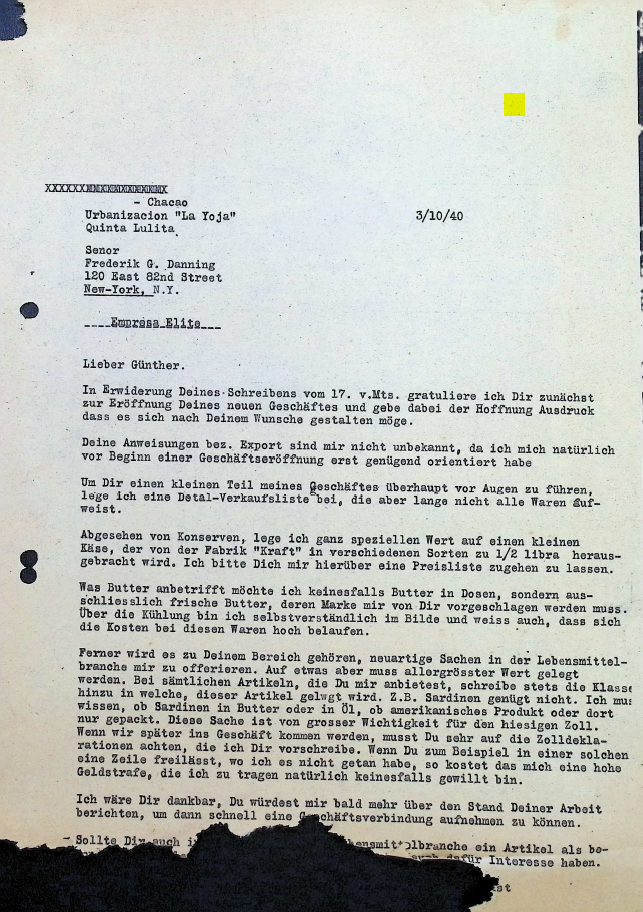
Letter from Dietrich Gerstel to his cousin Frederick G. Danning regarding business ties (1940)
It documents the family’s initial import efforts with New York and the start of their business activities in Venezuela.
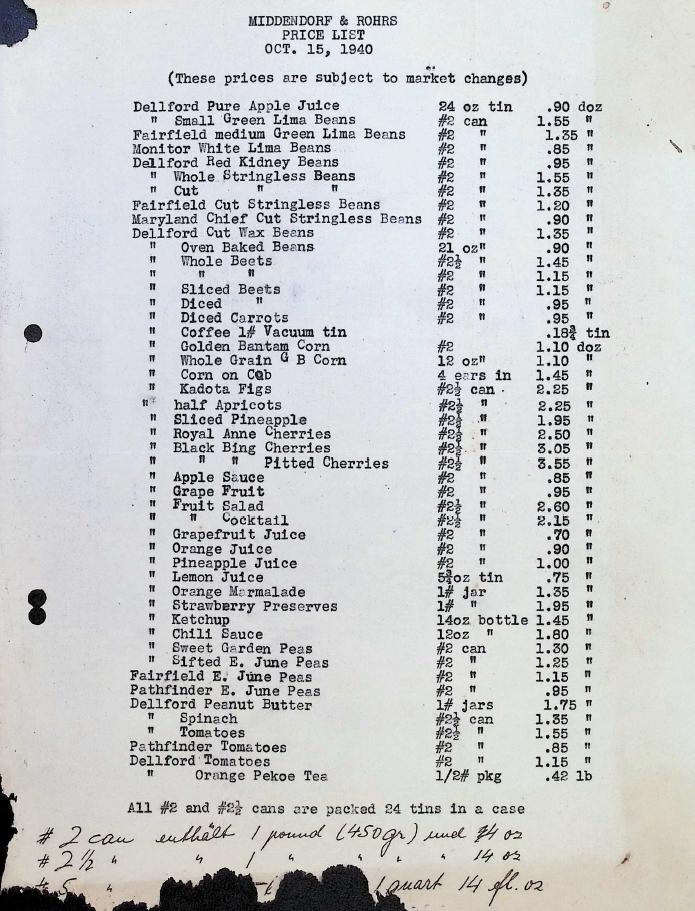
List of Food Products Imported by Middendorf & Rohrs (1940)
Provide details on the catalog of canned goods and the inventory for the local market.
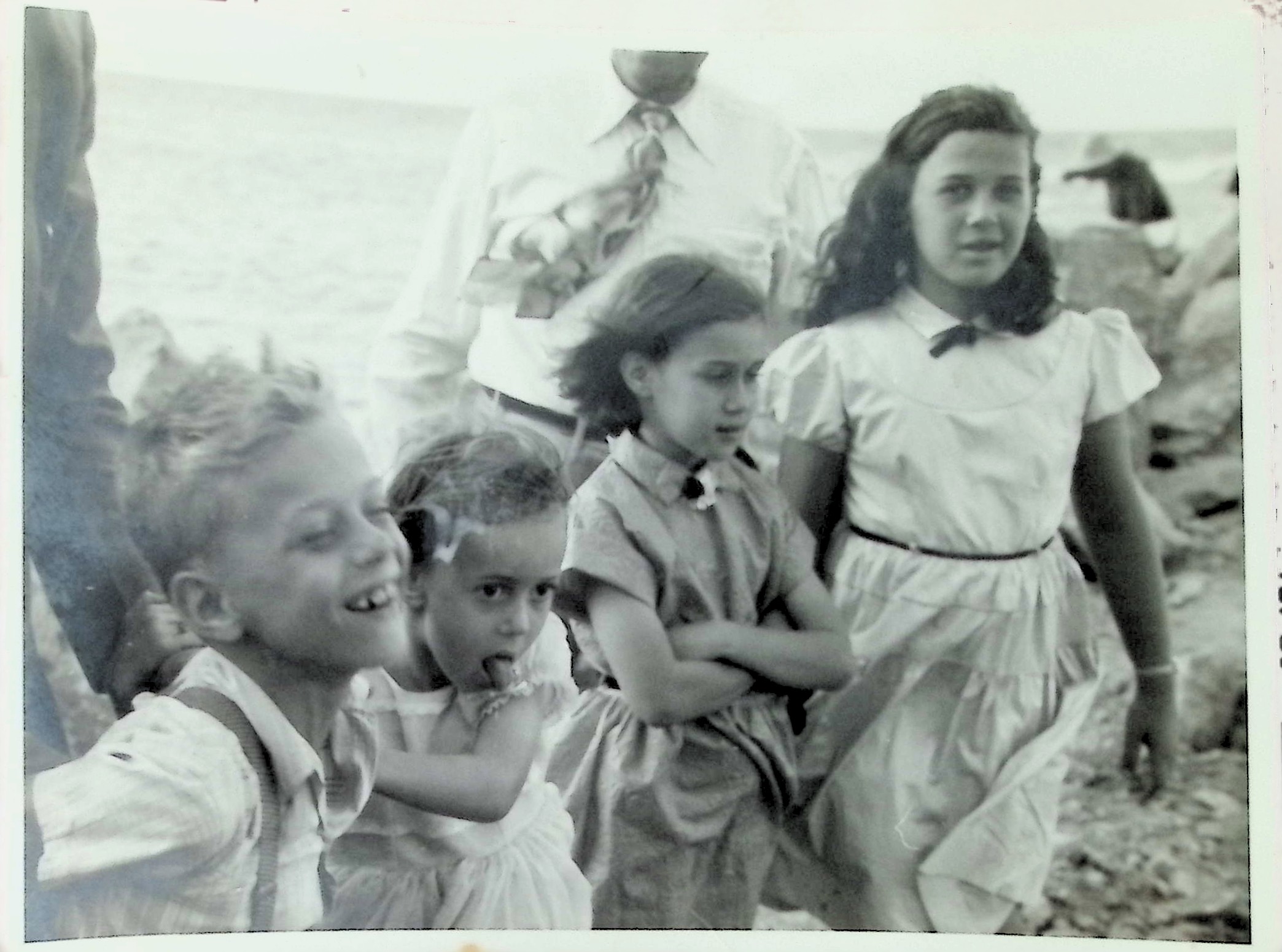
The Gerstel Ostberg siblings: Hans Peter, Graciela, Bettina, and Renate (from left to right), Venezuela. c. 1953.
The Shadows of War and the Return to One's Calling
While Dietrich and Irmgard were settling into life in Venezuela, the end of World War II brought confirmation of the tragedies they had most feared. In a letter sent in 1945 to his uncle Alfred Gerstel in the United States, Dietrich stated that he had learned of the murder of his in-laws, Ernst and Elsa Ostberg, in the concentration camps at Theresienstadt (1943) and Auschwitz (1944), respectively, and deeply regretted not having been able to bring them to Venezuela in time. Added to this grief, in early 1946, was the news of his own mother’s death in New York from cancer—a loss that ultimately sealed a devastating cycle of distant mourning and family desolation.
In 1947, Dietrich decided to make a drastic shift in his business activities by venturing into vehicle rental and sales, seeking a well-deserved break after six years of intense work in food distribution. However, in 1949, he returned to his true calling by founding “Oficina Gerstel,” located on the ground floor of Quinta Bettina in the Sabana Grande neighborhood. From the comfort of his family home, he began to build a reputation for integrity and efficiency in auditing and accounting, laying the foundation for the wealth that would support his family in the decades to come.
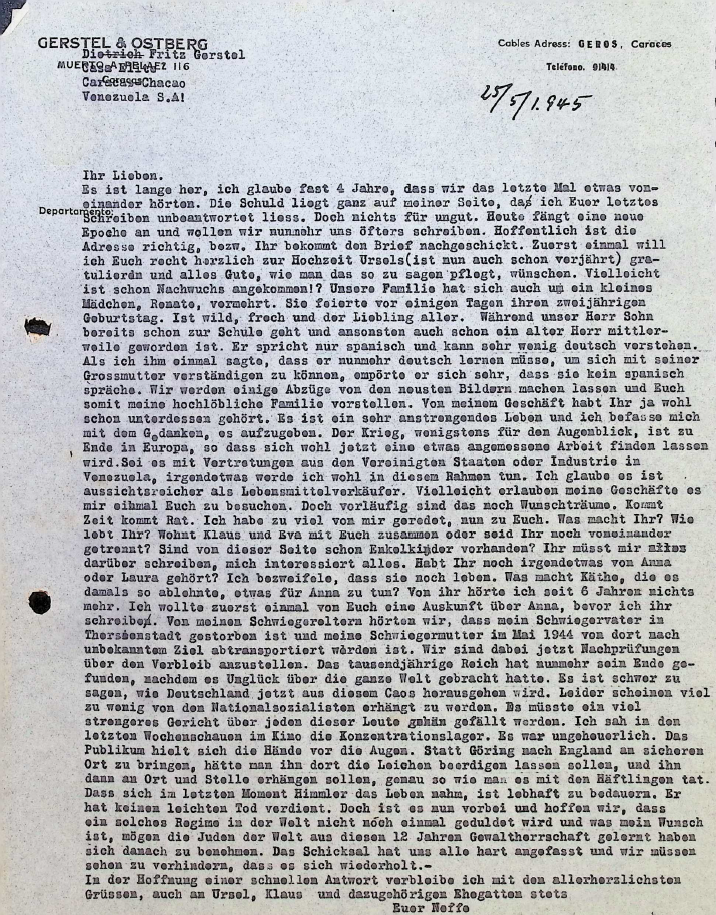
Letter from Dietrich Gerstel to his uncle Alfred Gerstel after the end of the war (1945)
In it, Dietrich recounts the end of the conflict in Europe, the fate of her in-laws in the concentration camps, and her business activities in Venezuela.
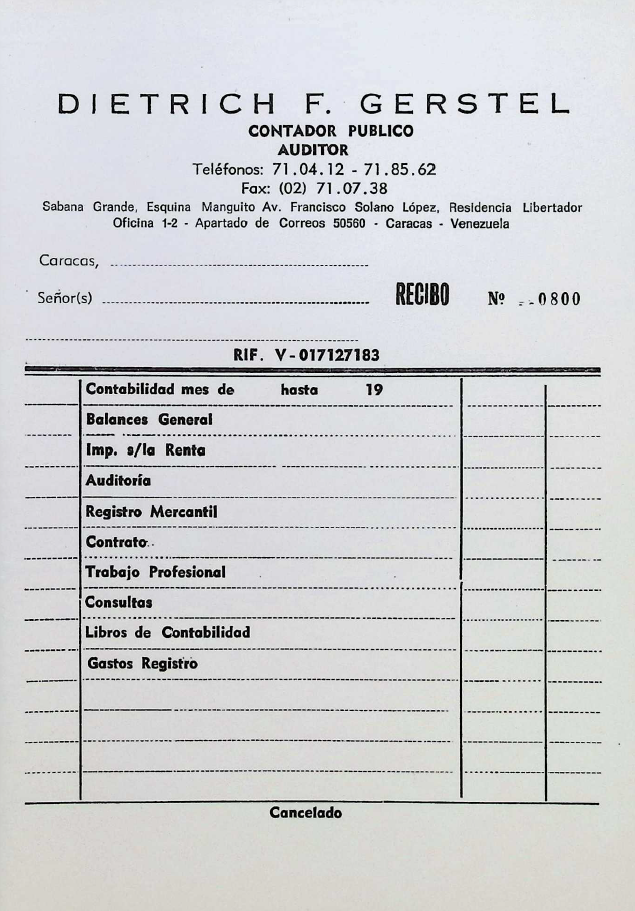
Official Receipt from the Dietrich F. Gerstel Accounting Office
A reflection of the growth of his professional firm and the business operations he manages in Sabana Grande.
The Call of Memory: The Struggle for Family Heritage
Less than two years after the end of World War II, Dietrich Gerstel, together with his two older brothers, formally filed claims for restitution and compensation with the German government. The goal was to recover the valuable assets that had been seized from them under the Nazi regime—a claim that encompassed not only the iconic family residence at Tiergartenstraße 25 in Berlin and the Paretz country estate in Brandenburg, but also significant industrial and commercial properties. However, what began as an immediate quest for justice turned into a tortuous process that would span decades, generating a voluminous archive of correspondence between the brothers and their attorneys.
Stable on the Paretz family estate, Brandenburg, Germany. c. 1925–1930.
Dietrich with his father, Walter Gerstel, in Paretz, Brandenburg, Germany. c. 1925.
In the midst of this long struggle, Dietrich also mustered the courage necessary to directly confront the individual beneficiaries of the plunder. One example of this was the firm letter he sent to Dr. Albert Würth, directly urging him to reflect on the injustice committed during that period, when all of the shares of Permutit AG passed into his hands. Thus, the Gerstels’ legal battle was fought not only in the courts but also as a resolute moral and historical confrontation.
Letter from Dietrich Gerstel to Dr. Würth Demanding Restitution (1947)
In the document, Dietrich denounces the unjust dispossession of his family’s property and calls for justice to be restored after the war ends.
Historical Documents
Official Decree of Venezuelan Naturalization
March 19, 1954
Official certification of Venezuelan citizenship for the Gerstel couple, formalizing their full legal integration into the country.
A period during which the Nazi regime systematically carried out the extermination of millions of European Jews. It was during this time that Dietrich’s in-laws were deported to Theresienstadt and Auschwitz, a tragic fate that he would only be able to confirm after the war ended.
October Revolution in Venezuela (1945)
The coup d’état that overthrew President Isaías Medina Angarita and marked the beginning of the “ADECO Triennium.” In his correspondence, Dietrich explicitly refers to the “days of bombings” in Caracas, a reflection of the local political instability he had to endure while establishing his first business ventures.
Allied Restitution Decrees (1945)
A supportive legal framework designed to reverse Nazi plunder and return confiscated property to families persecuted under “Aryanization.” For Dietrich, this decree marked the beginning of a complex and protracted transatlantic bureaucratic battle to try to recover his family’s assets.
Theresienstadt
This ghetto and concentration camp in occupied Czechoslovakia, where Ernst Ostberg died, claimed the lives of more than 33,000 people due to starvation, overcrowding, and disease.
Auschwitz
The largest Nazi concentration and extermination camp, located in occupied Poland, where approximately 1.1 million people were murdered.
Population of Venezuela (1941)
With a population of just 3.8 million, the country was undergoing a profound transition from a rural economy to an urban and oil-based one.
Contexto Histórico
Primera Guerra Mundial (1914-1918)
Dietrich nació durante el último año de la guerra, en una Alemania devastada por el conflicto y marcada por la escasez alimentaria.
República de Weimar (1919-1933)
Período democrático en Alemania caracterizado por efervescencia cultural, inestabilidad política y avances médicos significativos, como los del Oskar-Helene-Heim.
Crisis de 1923
Hiperinflación catastrófica en Alemania. Un pan llegó a costar 200 mil millones de marcos. La clase media perdió sus ahorros.
30 de enero de 1933
Adolf Hitler asume como Canciller de Alemania, marcando el fin de la democracia. En marzo se aprueban las primeras leyes antisemitas.
Ley de Restauración del Funcionariado (abril 1933)
Primera ley que expulsó a judíos de cargos públicos y profesiones liberales. Afectó directamente a Walter Gerstel en sus posiciones directivas.
1934: Año de consolidación nazi
Hitler elimina oposición interna y se proclama Führer. Miles de judíos alemanes comienzan a emigrar, aunque muchos aún confían en que “pasará”.
Datos Clave
Población judía en Alemania (1933)
~500,000 personas (0.75% del total)
Judíos en Berlín
~160,000, la comunidad judía más grande de Alemania