06
1989–1997
The Final Archive: A Legacy of Resilience
The final chapter documents Dietrich’s years of widowerhood, his tenacious physical resistance against his ultimate decline, the symbolic closure with his birthplace of Berlin, and the lasting significance of his personal archive as a historical testament.
A Distant Echo from Berlin
Following Irmgard’s death, Dietrich faced his widowerhood at Quinta Bettina, now accompanied by his daughter Renate, who moved in with him to ease his solitude. In 1990, history took one last symbolic turn: a year after the fall of the Wall, the city of Berlin sent an official invitation to its formerly persecuted citizens to visit as an act of reparation.
Dietrich accepted the gesture but responded with frankness regarding his reality: due to his severe disability and his use of prosthetics, he required first-class travel conditions that the German bureaucracy could not guarantee. Although the physical journey never took place, the correspondence represented a moral restitution: the city that had expelled him half a century earlier finally acknowledged his belonging and the injustice of his departure.
The Final Battle for Health
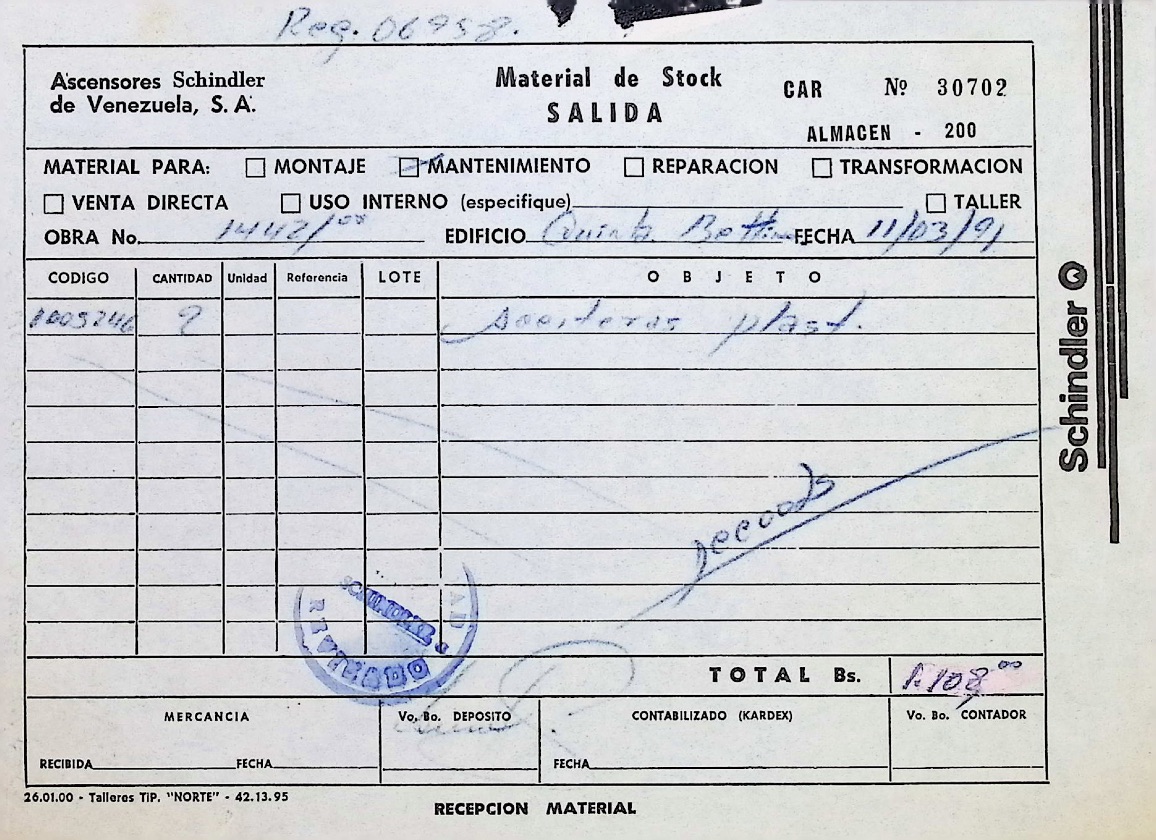
During the early 1990s, Dietrich maintained control of his home with his habitual discipline, managing domestic details—such as the maintenance of his home’s elevator, vital for his mobility—even as his body began to yield.
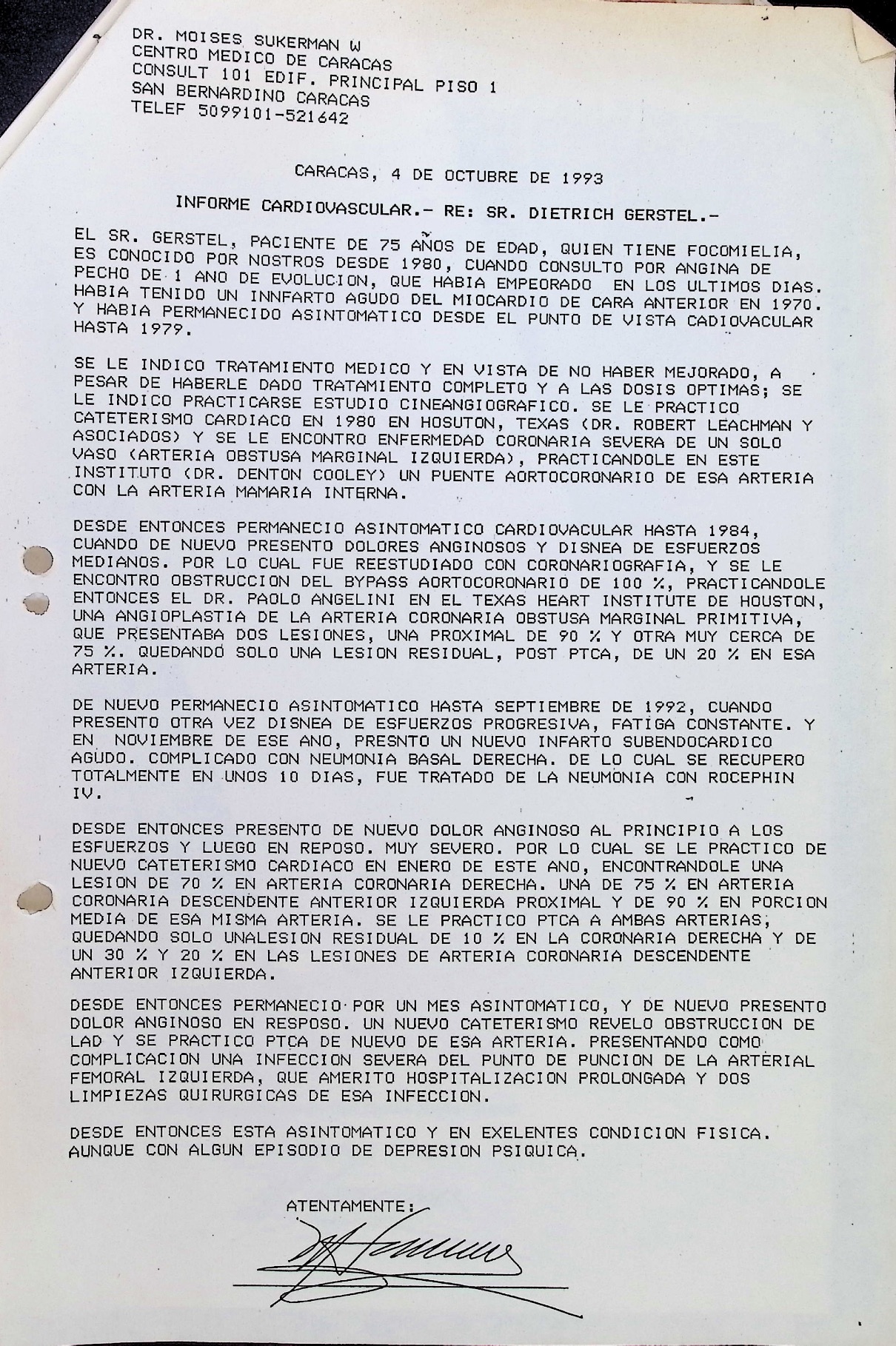
He suffered further heart attacks and arterial complications that required prolonged hospitalizations. Medical reports from 1993, while noting his “excellent physical condition” relative to his clinical history, already evidenced the cumulative wear of a life of extraordinary physical effort and the “psychological depression” stemming from his grief.
Silence and the Final Farewell
Around 1995, Dietrich’s resistance reached its limit after he suffered a stroke (ACV) that led to kidney failure. Defying all medical odds and sustained by the devotion of his children, he survived in a profound coma for eighteen months in his own room in Prados del Este, becoming the silent heart of the family.
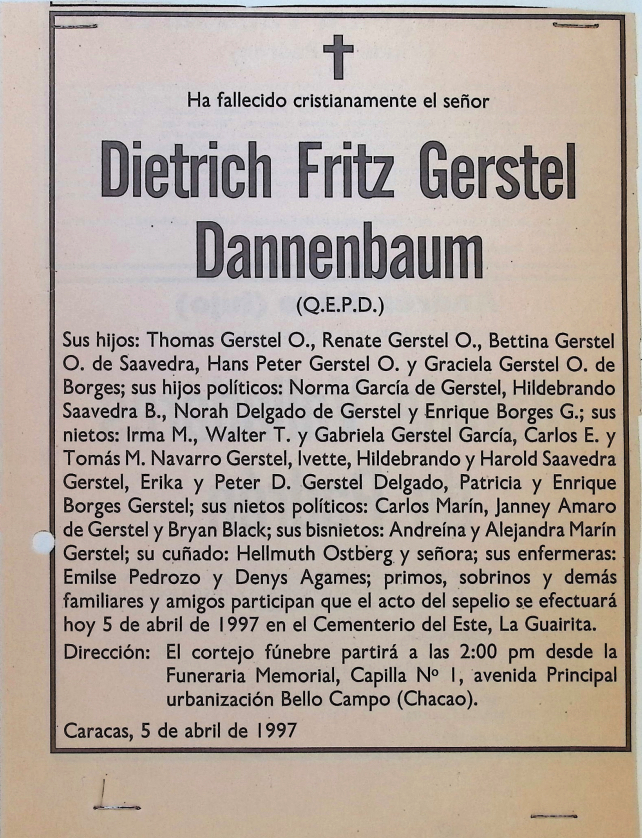
Finally, on April 4, 1997, Dietrich Fritz Gerstel passed away in peace. His funeral was attended by multitudes—a testament to the respect he had earned within Venezuelan society as a man of irreproachable ethics.
The Documentary Legacy: Defeating Oblivion
Upon his death, Dietrich left behind more than a material inheritance; he left a monumental archive. For eighty years, he obsessively preserved every letter, invoice, medical certificate, and photograph, saving them from wars, transatlantic moves, and the passage of time.
This archive was not merely an administrative record, but a deliberate act of resistance against oblivion. Thanks to his meticulousness, it has been possible to reconstruct this story today, proving how a man born with every physical disadvantage in a hostile world managed to build a life full of dignity, family, and success.
Historical Documents
Elevator Maintenance Invoice
A receipt from Ascensores Schindler de Venezuela, S.A. for services rendered at the family residence, “Quinta Bettina.”
Retrospective Cardiovascular Report
A clinical summary issued by Dr. Moisés Sukerman at the Centro Médico de Caracas.
Obituary in the Press
A public announcement marking the definitive conclusion of Dietrich Fritz Gerstel’s biography. The document displays the extensive family network he succeeded in building in Venezuela—children, grandchildren, and great-grandchildren—contrasting his well-attended passing with the solitude of his initial exile. Notably, it includes a mention of his nurses (Emilse Pedrozo and Denys Agames), a testament to the constant and dedicated care he received at Quinta Bettina during his final years of bedrest.
German Reunification (1990)
Following the fall of the Berlin Wall in 1989, Germany officially reunified in October 1990, with Berlin once again becoming the sole capital. The Berlin Senate intensified its Wiedergutmachung (reparation) programs, inviting exiled Jews to visit the city in an effort to heal the wounds of the Nazi past.
The "Caracazo" and Political Instability (1989–1992)
Venezuela entered a period of social and political upheaval, including the 1989 social unrest and two attempted coups in 1992. Dietrich spent his final lucid years witnessing the once-stable nation that had welcomed him enter a phase of profound uncertainty.
The 1994 Banking Crisis
The collapse of a significant portion of the Venezuelan financial system. This was a severe blow to the national economy during the years when Dietrich’s health had already reached a critical state.
The Berlin Visitor Program
Since 1969, Berlin has invited over 35,000 formerly persecuted citizens to return. The invitation sent to Dietrich in 1990 coincided with the program’s peak following German reunification.
Life Expectancy with Phocomelia
Dietrich lived to the age of 79. At the time of his birth (1917), most children with severe malformations did not reach adulthood or were institutionalized. His longevity was an exceptional case of both medical success and personal will.
Cause of Death
According to his certificate, he passed away due to uremia and chronic renal failure—complications typical of advanced age and systemic failure. This brought his life cycle to a close through natural causes, rather than his congenital disability.
Contexto Histórico
Primera Guerra Mundial (1914-1918)
Dietrich nació durante el último año de la guerra, en una Alemania devastada por el conflicto y marcada por la escasez alimentaria.
República de Weimar (1919-1933)
Período democrático en Alemania caracterizado por efervescencia cultural, inestabilidad política y avances médicos significativos, como los del Oskar-Helene-Heim.
Crisis de 1923
Hiperinflación catastrófica en Alemania. Un pan llegó a costar 200 mil millones de marcos. La clase media perdió sus ahorros.
30 de enero de 1933
Adolf Hitler asume como Canciller de Alemania, marcando el fin de la democracia. En marzo se aprueban las primeras leyes antisemitas.
Ley de Restauración del Funcionariado (abril 1933)
Primera ley que expulsó a judíos de cargos públicos y profesiones liberales. Afectó directamente a Walter Gerstel en sus posiciones directivas.
1934: Año de consolidación nazi
Hitler elimina oposición interna y se proclama Führer. Miles de judíos alemanes comienzan a emigrar, aunque muchos aún confían en que “pasará”.
Datos Clave
Población judía en Alemania (1933)
~500,000 personas (0.75% del total)
Judíos en Berlín
~160,000, la comunidad judía más grande de Alemania
Tasa de suicidios judíos (1933-1945)
Aumentó más del 500%
Focomelia
Ocurre en 1 de cada 100,000 nacimientos
Oskar-Helene-Heim
Fundado en 1905, pionero en ortopedia pediátrica